


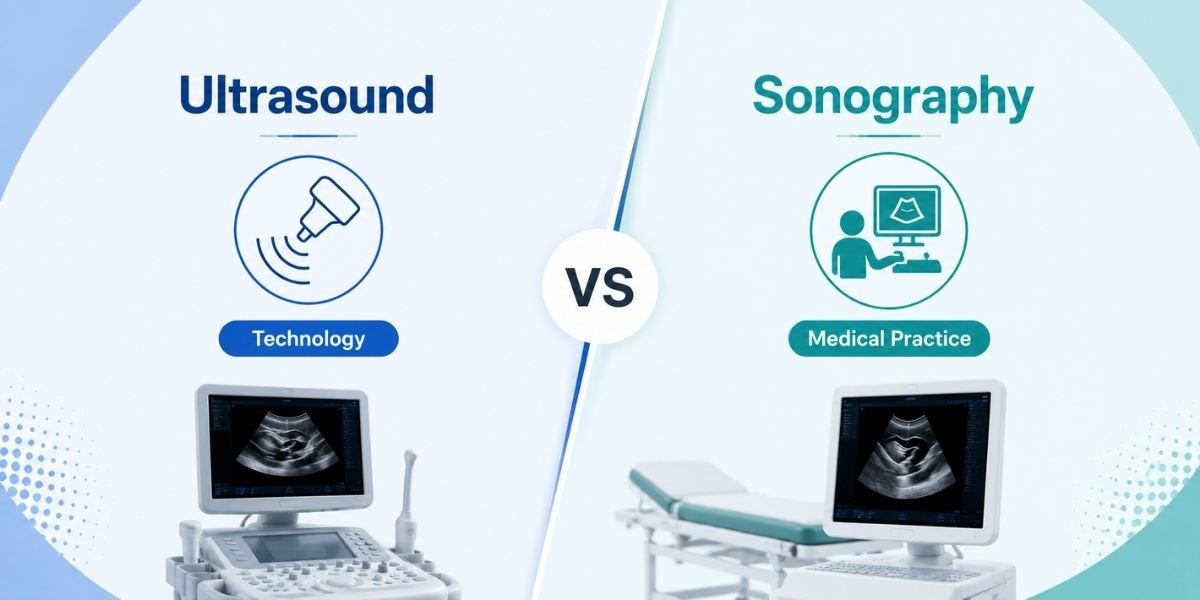
If you have ever searched for ultrasound vs sonography or wondered whether these two medical terms mean the same thing, you are not alone. Many patients hear doctors say “ultrasound,” while diagnostic centers often use the word “sonography.” That creates confusion, especially during pregnancy scans or routine health checkups.
At first glance, both terms sound interchangeable. In daily medical conversations, people often use them that way too. However, there is a small technical difference between the two. Understanding that difference can help you feel more confident before your next scan appointment.
If you are planning a pregnancy scan or looking for a trusted center for RNK Diagnostics, many patients searching for a 4D ultrasound in Dwarka also come across the terms sonography and ultrasonography during booking or report discussions. Knowing what these words mean makes the process much easier.
What Is Ultrasound?
The term “ultrasound” refers to the technology that uses high-frequency sound waves to create images of structures inside the body. This imaging procedure helps doctors examine organs, tissues, blood vessels, and even fetal growth during pregnancy.
Unlike X-rays, ultrasound imaging does not use radiation. Instead, a handheld device called a transducer sends sound waves into the body. Those waves bounce back and create real-time imaging on a monitor.
In simple words, ultrasound is the actual imaging technology.
Doctors use ultrasound scans for:
- Pregnancy and fetal imaging
- Abdominal imaging
- Pelvic scans
- Heart imaging through echocardiography
- Doppler imaging for blood flow
- Soft tissue imaging
- Thyroid and breast examinations
Medical professionals prefer ultrasound because it is safe, noninvasive, painless, and fast.
What Is Sonography?
Now comes the second half of the debate: what is sonography?
Sonography refers to the process of performing the ultrasound scan and interpreting the sound wave imaging results. The healthcare professional who performs this scan is called a sonographer.
So technically:
- Ultrasound = the imaging technology
- Sonography = the diagnostic procedure using ultrasound technology
Many medical sources explain that people use both terms interchangeably in hospitals and diagnostic centers.
Think of it like this:
- A camera is the tool
- Photography is the process
Similarly:
- Ultrasound is the tool
- Sonography is the imaging examination process
Yes, medicine sometimes enjoys making simple things sound complicated.
Ultrasound vs Sonography: The Real Difference
Here is the easiest way to understand the difference between ultrasound and sonography:
| Ultrasound | Sonography |
| Refers to the sound wave technology | Refers to the scanning procedure |
| Uses high-frequency sound waves | Produces diagnostic images |
| Imaging tool | Diagnostic imaging method |
| Creates images | Interprets and records images |
| Often used casually in healthcare | More technical medical term |
That is why people searching for is ultrasound same as sonography usually receive mixed answers. In practical healthcare settings, both words often point to the same scan. However, from a technical perspective, they describe different parts of the same process.
Why Doctors Prefer Ultrasound Imaging
Ultrasound imaging has become one of the most trusted tools in healthcare diagnostics. Doctors use it because it provides real-time imaging without exposing patients to ionizing radiation.
That makes it especially useful for:
- Prenatal ultrasound and fetal imaging
- Pregnancy scan monitoring
- Gynecological scans
- Internal organ imaging
- Vascular and Doppler ultrasound examinations
- Scan diagnosis during emergencies
Unlike CT scans or X-rays, ultrasound procedures are generally safer for repeated use. This advantage matters a lot during pregnancy screening, where multiple scans may be necessary.
Common Types of Ultrasound Scans
Understanding the different types of ultrasound scans can also clarify the ultrasound and sonography difference.
Abdominal Ultrasound: Doctors use abdominal ultrasound to examine organs like the liver, pancreas, kidneys, and gallbladder.
Pelvic Ultrasound: This scan checks reproductive organs and helps diagnose gynecological conditions.
Doppler Ultrasound: Doppler imaging evaluates blood flow inside veins and arteries. It helps detect blockages or circulation problems.
Prenatal Ultrasound: Pregnancy scans monitor fetal growth, heartbeat, and development.
3D and 4D Ultrasound: Modern imaging technology allows doctors to capture detailed fetal images in real time. Many expecting parents today specifically search for 4D ultrasound in Dwarka because these scans provide clearer views of fetal movements and facial features.
If you are considering advanced prenatal imaging, you can also explore trusted diagnostic centers like RNK Diagnostics through their Google Business Profile location while searching for reliable ultrasound services nearby.
Is Ultrasound the Same as a Sonogram?
Here comes another term that often creates confusion: sonogram vs ultrasound.
A sonogram is the actual image produced during sonography.
Here is the quick breakdown:
- Ultrasound = technology
- Sonography = scanning procedure
- Sonogram = final image
So when someone asks, “What is sonography vs ultrasound?” the answer depends on whether they mean the machine, the procedure, or the image.
Medical terminology sometimes feels like a puzzle designed by people who enjoy coffee more than simplicity.
How Does an Ultrasound Procedure Work?
A standard ultrasound procedure follows a simple process:
- The technician applies gel to the skin
- A transducer moves over the examination area
- Sound waves travel into the body
- Echoes bounce back from tissues and organs
- A computer converts those echoes into images
Radiology experts explain that ultrasound captures real-time movement inside the body. That makes it extremely useful for observing blood flow, organ movement, and fetal activity.
The scan usually takes between 15 and 45 minutes depending on the examination type.
Diagnostic Ultrasound vs Sonography
People also search for diagnostic ultrasound vs sonography because the terms appear differently in reports and clinic brochures.
Diagnostic ultrasound refers to the medical use of ultrasound imaging to detect or monitor conditions.
Sonography refers more broadly to the ultrasonography process itself.
Again, the practical difference remains small in real-world healthcare conversations.
Most hospitals, radiology imaging centers, and diagnostic labs use both terms interchangeably.
Why Ultrasound Is Important in Pregnancy
Pregnancy care depends heavily on ultrasound imaging.
Doctors use prenatal ultrasound for:
- Confirming pregnancy
- Monitoring fetal growth
- Detecting abnormalities
- Measuring amniotic fluid
- Checking fetal heartbeat
- Tracking fetal position
Advanced obstetric imaging techniques like 3D and 4D scans also improve bonding between parents and babies before birth.
That explains why searches for Ultrasound in Dwarka and advanced pregnancy scans continue to rise among expecting parents looking for accurate and reliable imaging services.
Are Ultrasound Scans Safe?
According to trusted medical imaging organizations, ultrasound scans are considered safe because they do not use radiation.
Doctors have used ultrasonography for decades in healthcare diagnostics with no known harmful effects when performed correctly.
However, medical professionals still recommend scans only when medically necessary. More scans do not automatically mean better healthcare.
Yes, even babies deserve a break from surprise photo sessions.
When Should You Get an Ultrasound Scan?
Doctors may recommend an ultrasound imaging test if you experience:
- Abdominal pain
- Pregnancy-related concerns
- Swelling or infection
- Blood circulation issues
- Pelvic discomfort
- Thyroid problems
- Breast lumps
- Kidney concerns
Ultrasound scans also help guide biopsies and certain medical procedures.
Choosing the Right Diagnostic Center
The accuracy of a sonography scan depends heavily on equipment quality and technician expertise.
When selecting a diagnostic center, look for:
- Experienced radiologists and sonographers
- Modern imaging technology
- Proper hygiene standards
- Clear reporting systems
- Positive patient reviews
- Advanced scan options like Doppler and 4D imaging
Patients searching for Ultrasound in Dwarka often prefer centers that provide both routine and advanced diagnostic imaging under one roof.
If you need modern pregnancy or diagnostic imaging services, many patients also explore 4D ultrasound in Dwarka through trusted centers like RNK Diagnostics for detailed prenatal and diagnostic scans.
Final Thoughts on Ultrasound vs Sonography
Once you understand what is meant by the words, the discussion of sonography vs. ultrasound is easy.
This is the quick answer:
- Ultrasound is an imaging technology
- The diagnostic scanning process is called sonography.
- The image produced is called a sonogram.
These are used interchangeably in health care discussions between doctors and patients on a day-to-day basis. However, it is helpful to be familiar with the difference between the two in order to interpret reports, suggestions for scanning and diagnostics.
Modern medical imaging is faster, safer and more accurate – from imaging the upper abdomen to imaging the womb during pregnancy, Doppler imaging and even a routine ultrasound procedure.
Best of all, it does this without the use of tiny photographers in the machine.When it comes to getting a scan from the reliable professionals, it’s pretty simple to book a scan. Request an appointment with RNK Diagnostics in the case of Ultrasound and advanced pregnancy or diagnostic services such as 4D ultrasound. Call us today and find out how we can provide you with accurate, timely reports with proper care and guidance.