


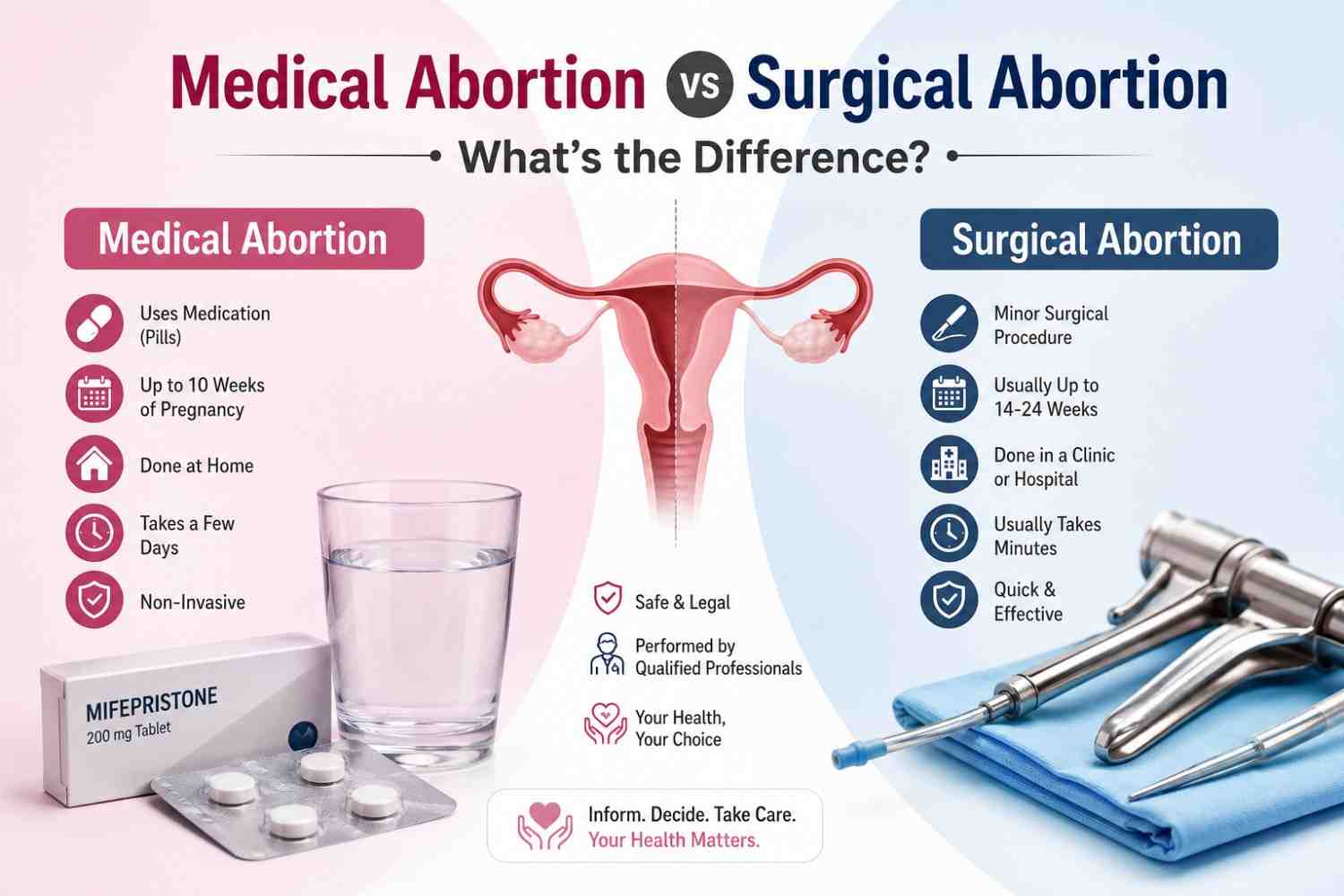
When facing an unplanned pregnancy or a medical condition that requires pregnancy termination, understanding the available treatment options is important. Medical Abortion vs Surgical Abortion is one of the most common questions people ask before consulting a healthcare professional. Both methods are medically recognized, but they differ in how they are performed, when they are recommended, the recovery process, and potential risks.
In this guide, we’ll explain the Medical Abortion vs Surgical Abortion difference, how each procedure works, their benefits and limitations, and why proper medical evaluation is essential before making any decision.
What Is Abortion?
Abortion is the medical termination of a pregnancy before the fetus can survive outside the uterus. Depending on the stage of pregnancy and a person’s medical condition, abortion may be carried out using medications (known as a medical abortion) or through a medical procedure (known as a surgical abortion). The appropriate method depends on factors such as gestational age, overall health, medical history, and the recommendation of a qualified healthcare provider.
Before deciding on any treatment, doctors usually recommend a Pregnancy ultrasound in Dwarka to confirm the pregnancy, determine the gestational age, and rule out conditions such as an ectopic pregnancy.
Medical Abortion vs Surgical Abortion: What’s the Difference?
The main Difference between medical and surgical abortion is the method used to end the pregnancy.
A Medical abortion procedure uses prescription medications to terminate an early pregnancy. It is generally recommended during the early weeks of pregnancy and involves taking medicines under medical supervision.
A surgical abortion procedure, by contrast, is carried out by a trained healthcare professional with specialized medical instruments in a clinic or hospital setting, not in a home setting. It is commonly suggested when the pregnancy has moved past the point where medication is an option, or when there are particular medical causes and related considerations.
Even though both methods can be effective when they’re done with proper medical oversight, the decision isn’t just about personal preference; instead, it depends on the individual medical circumstances.
What Is a Medical Abortion Procedure?
A medical abortion process is basically taking medicines that halt the pregnancy from moving forward, and they also help the womb expel the pregnancy tissue. This approach does not need surgery or any sort of anesthesia; it’s more straightforward than that, at least in how it works.
Advantages of Medical Abortion
- No surgical instruments are required.
- Can often be completed at home under medical guidance.
- May feel more private for some individuals.
- Highly effective when used within the recommended time frame.
Medical Abortion Side Effects and Risks
Like any medical treatment, there are possible Medical abortion side effects and risks, including:
- Cramping
- Heavy bleeding
- Nausea or vomiting
- Fever or chills for a short period
- Incomplete abortion requiring additional treatment (in some cases)
Anyone experiencing severe pain, excessive bleeding, persistent fever, or foul-smelling discharge should seek immediate medical attention.
What Is a Surgical Abortion Procedure?
A surgical abortion procedure is carried out by a licensed gynecologist in a healthcare setting. The approach is not the same for every moment in the pregnancy; it shifts with the stage, but in general it means taking away the pregnancy tissue from the uterus using approved medical methods.
Advantages of Surgical Abortion
- Usually completed within a short period.
- High success rate.
- Bleeding may be shorter than with medication in many cases.
- Appropriate when medication is not suitable.
Some possible risks, while uncommon when done by seasoned professionals, do include things like infection, bleeding, or injury to the uterus, and even anesthesia reactions. These risks tend to be reduced a lot with proper medical care, plus the right follow-up, though.
Medical Abortion vs Surgical Abortion Recovery
Understanding Medical abortion recovery vs surgical abortion recovery helps patients know what to expect after treatment.
Medical Abortion Recovery
Recovery can take a couple of days or a few weeks depending on the person. Bleeding and cramping are pretty common and tend to ease down gradually. It’s really important to do a follow-up with the treating doctor to make sure the abortion is fully complete, or at least to confirm that everything has resolved as expected.
Surgical Abortion Recovery
Most people kind of recover physically within a few days, even though light bleeding and mild cramping might still hang around for a short while. Doctors usually suggest you steer away from anything too strenuous for a limited time, and also keep those scheduled follow-up appointments, just to be safe.
No matter the approach, emotional recovery stays just as crucial. People should try to gather support from trusted family members, counselors, or a healthcare provider if it becomes necessary.
Which Abortion Method Is Safer?
A common concern is, Which abortion method is safer?
Both medical and surgical abortion are considered safe when:
- Performed according to medical guidelines.
- Recommended by a qualified healthcare provider.
- Appropriate for the stage of pregnancy.
- Followed by proper medical monitoring.
There is no single method that is universally “better.” The safest option depends on gestational age, medical history, underlying health conditions, and the doctor’s clinical assessment.
Why Is an Ultrasound Important Before an Abortion?
An ultrasound plays a vital role before any abortion procedure because it helps healthcare providers:
- Confirm the pregnancy.
- Determine the exact gestational age.
- Identify the location of the pregnancy.
- Rule out ectopic pregnancy.
- Recommend the most appropriate treatment option.
Choosing the Best diagnostic centre in Dwarka for pregnancy imaging helps ensure accurate results that support informed medical decisions.
When Should You Consult a Doctor?
You should consult a qualified healthcare provider if:
- You suspect you are pregnant.
- You have severe abdominal pain or heavy bleeding.
- You experience unusual symptoms after treatment.
- You need guidance about available treatment options.
- You have questions regarding recovery or future pregnancy planning.
Self-medication or obtaining abortion medicines without medical advice can be dangerous and should be avoided.
Final Thoughts
Understanding medical abortion vs surgical abortion can help people decide with more clarity during a discussion with qualified healthcare professionals. Even though both approaches are safe and reliable when they fit the medical situation, “the better option” really depends on the person’s health, the stage of pregnancy, and the careful guidance of an expert clinician.
Before any kind of treatment, getting the right diagnosis first really is essential. For that, a pregnancy ultrasound can be quite helpful— it helps figure out the gestational age and then point the next steps in care. RNK Diagnostics offers solid diagnostic imaging, including pregnancy ultrasound services, which can support doctors as well as patients with clear reports that are needed for more informed clinical choices. And please, always consult a qualified gynecologist before you decide anything about pregnancy care or termination.