

Pregnancy is a special journey, and regular prenatal check-ups help doctors monitor both the mother and baby’s health. Along with routine ultrasound scans, doctors may sometimes recommend a Fetal Echo Test to take a closer look at the developing baby’s heart. This specialized examination can provide valuable information about the structure and functioning of the fetal heart before birth.
If you have been advised to undergo a Fetal Echo Test, it is natural to have questions about why it is needed, when it should be performed, how it is done, and what the results can show. Understanding the test can help expecting parents feel more informed and comfortable during their pregnancy.
What Is a Fetal Echo Test?
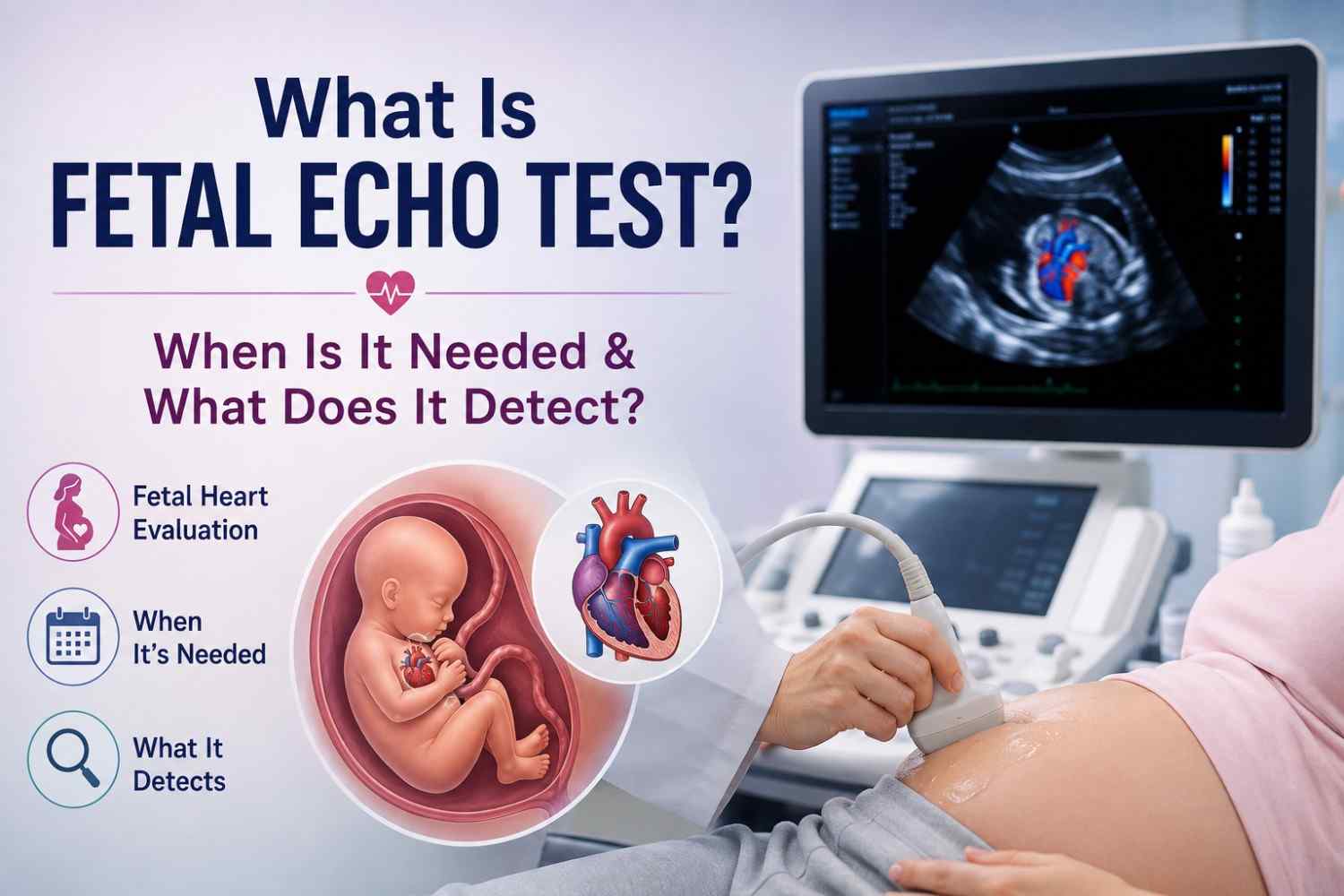
A Fetal Echo Test, also known as Fetal Echocardiography, is a specialized ultrasound examination used to evaluate the baby’s heart while still in the womb. Unlike a routine pregnancy ultrasound, this test focuses specifically on the structure, chambers, valves, blood flow, and overall functioning of the fetal heart.
The test uses sound waves to create detailed images of the baby’s heart. It does not involve radiation and is generally considered a safe diagnostic examination when performed by trained professionals.
A Fetal Echo Test can help doctors identify certain structural or functional heart conditions before the baby is born. Early information may also help the healthcare team plan appropriate monitoring and care during pregnancy and after delivery.
When Is a Fetal Echo Test Needed?
Not every pregnant woman needs a fetal heart scan. Your doctor may recommend a Fetal Echo Test when there is a particular reason to examine the baby’s heart more closely.
Some situations in which fetal echocardiography may be advised include:
- A suspected heart abnormality during a routine ultrasound.
- A family history of certain congenital heart conditions.
- Certain maternal health or pregnancy-related risk factors.
- Abnormal findings in another prenatal screening test.
- Certain fetal conditions that may be associated with heart problems.
- A previous pregnancy involving a baby with a congenital heart condition.
The decision depends on individual circumstances. Your doctor or fetal medicine specialist can determine whether a detailed fetal heart examination is appropriate for your pregnancy.
When Is a Fetal Echo Test Performed?
The timing of a Fetal Echo Test can be a little bit all over the place, depending on the pregnancy situation and even more so on the referral reason. Usually, a more detailed fetal heart exam is done around the middle of pregnancy, because at that stage the baby’s heart can be observed with more depth and clarity.
In some cases, an earlier examination may be considered when there is a significant concern or specific clinical reason. Your doctor will recommend the appropriate timing based on your pregnancy, previous scan findings, and medical history.
It is important to follow the timing suggested by your healthcare provider rather than comparing your scan schedule with someone else’s pregnancy.
What Does a Fetal Heart Scan Detect?
The main purpose of a Fetal Heart Scan is to check the baby’s heart anatomy and how it’s working at the same time. During the exam, the specialist can look at the heart chambers, the big blood vessels too, plus the valves. They may also observe the heart rhythm and how the blood is actually moving through it.
A Fetal Echo Test may help identify certain Fetal Heart Abnormalities, including some structural heart defects. It can also provide information about how the heart is developing and functioning.
However, it’s important to know that no prenatal test can catch literally every possible heart problem. Some issues might show up later during pregnancy, or they may not be visible when the scan is done. Your specialist can walk you through what they saw and the real limits of the examination, depending on your own situation.
How Is the Fetal Echo Procedure Done?
The Fetal Echo Procedure is similar to an ultrasound examination. You will generally lie comfortably while a trained sonographer or specialist applies ultrasound gel to your abdomen. A transducer is then moved over the abdomen to obtain images of the baby’s heart.
The specialist carefully studies different views of the fetal heart and may assess blood flow using Doppler technology. The examination may take some time because detailed images of the baby’s heart are required.
The time can change a bit depending on where the baby is, gestational age, and how clear the images are. Sometimes the specialist might need extra angles if the baby’s position makes specific pieces of the heart kind of hard to capture.
Is Fetal Echo Safe During Pregnancy?
For most pregnancies, a fetal echocardiography is generally viewed as a safe ultrasound-based look when it’s medically justified and done by qualified professionals. It doesn’t involve X-rays or any ionizing radiation at all.
Like with any medical check, it should be done following the right clinical guidance, no matter what. If you find yourself concerned about the safe timing, or even whether it is necessary at all, talk it over with your doctor or the diagnostic specialist.
Fetal Echo Test vs Routine Ultrasound
A routine pregnancy ultrasound gives you this general overview about how the baby is growing and developing, their positioning, the placenta, and the other related pregnancy structures, you know. A Fetal Echo Test, on the other hand, is a bit more targeted; it really gives a more focused look at the baby’s heart.
This means fetal echocardiography does not necessarily replace routine prenatal ultrasound. Instead, it offers a more detailed evaluation when the baby’s heart requires closer examination.
So if your doctor has recommended a Fetal Echo Test, following the suggested timeline can help make sure any major findings get looked at as soon as possible. It is kind of all about timing, because earlier insight can be useful.
What Happens After the Test?
After the examination, the specialist goes through the images and then prepares a report from what they find. Your doctor can talk with you about whether the fetal heart seems normal or if additional monitoring or further evaluation is suggested.
A weird finding doesn’t always mean that a serious issue is there. Sometimes, more imaging or follow-up is needed to clear up what was seen. Your healthcare provider can tell you what that result actually means for your particular pregnancy, so don’t stress too early.
For expecting parents looking for Fetal echo in Dwarka, choosing a diagnostic centre with appropriate expertise and modern imaging facilities can make the examination more comfortable and informative. Patients may also be advised to undergo an NT scan in Dwarka as part of their recommended prenatal screening schedule, depending on their stage of pregnancy and doctor’s advice.
Why Early Evaluation Matters
The heart is one of the most important organs that forms during pregnancy. When a more careful assessment is suggested, doctors can use a Fetal Echo Test to gather helpful info about the baby’s cardiac development, right before delivery, sort of early on.
Early recognition of certain Fetal Heart abnormalities can let the medical team plan suitable follow-up, specialist consultations, delivery setup, or even newborn care if it’s needed. However, the exact “next steps” depend completely on what is found, and on the specific pregnancy overall.
Conclusion
A Fetal Echo Test is a specialized prenatal ultrasound that gives a closer look at the baby’s heart while it’s developing. It may help check cardiac structure and rhythm along with blood flow, and in some cases it can help spot certain heart abnormalities before birth.
If your doctor recommends fetal echocardiography, there is no need to panic. The recommendation may simply mean that a more detailed assessment is appropriate for your pregnancy. Understanding the purpose, timing, and Fetal Echo Procedure can help you approach the examination with greater confidence.
RNK Diagnostics tries to help expectant parents with steady diagnostic services and a more patient-friendly kind of approach. Make sure you always talk over your pregnancy screening needs, and also the test results, with your qualified healthcare provider for guidance that fits your exact situation.