


Pregnancy comes with excitement, endless advice from relatives, and more medical terms than anyone expects. One of those terms is the CVS test in pregnancy. If your doctor recommends it, you may suddenly find yourself opening twenty browser tabs and wondering if you accidentally enrolled in medical school. Don’t worry. This guide explains everything in a simple, human way.
If you are exploring advanced prenatal screening or searching for a CVS Test in Dwarka, you may also come across diagnostic support services like RNK Diagnostics, which helps patients understand important prenatal tests along with imaging options such as Ultrasound in Dwarka for complete fetal assessment.
What Is CVS Test in Pregnancy?
The longtail question most women ask is simple: What is the CVS test in pregnancy?
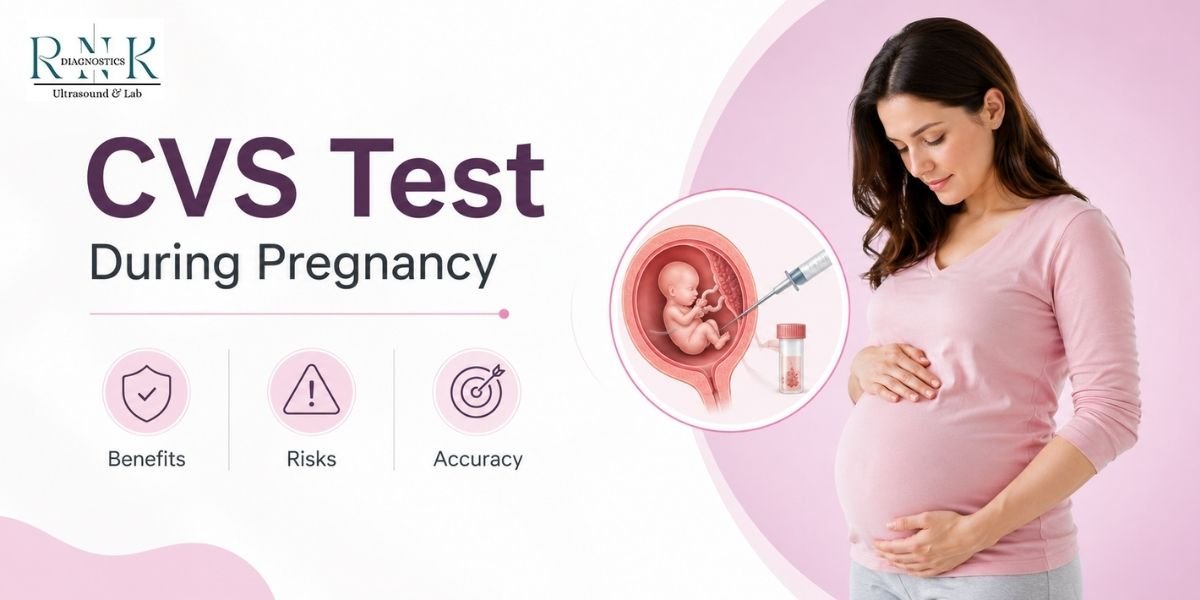
CVS stands for Chorionic Villus Sampling. It is a prenatal diagnostic test that checks whether the baby has certain genetic or chromosomal conditions. During the procedure, a doctor collects a tiny sample of placental tissue called chorionic villi. These cells carry the same genetic information as the baby.
Doctors usually perform the test between the 10th and 13th week of pregnancy. That early timing makes CVS useful because parents receive information sooner than with some other prenatal tests.
According to the NHS and Johns Hopkins Medicine, CVS helps detect conditions such as:
- Down syndrome
- Edwards syndrome
- Patau syndrome
- Cystic fibrosis
- Certain inherited genetic disorders
The test does not diagnose every health condition. For example, CVS does not detect neural tube defects like spina bifida.
Why Do Doctors Recommend CVS Testing?
Doctors usually suggest the CVS test in pregnancy when screening tests show a higher chance of genetic conditions. They may also recommend it if:
- The mother is above 35 years of age
- There is a family history of genetic disorders
- Previous pregnancies involved chromosomal abnormalities
- Early pregnancy screening results appear abnormal
- A detailed Ultrasound in Dwarka or elsewhere shows developmental concerns
Think of CVS like a “fact-checking test” for pregnancy screening reports. Screening tests estimate risk, but CVS gives a more definite answer.
Healthcare providers also use the test as part of broader women’s health awareness and reproductive health understanding. Early diagnosis helps families prepare emotionally, medically, and financially.
How Is the CVS Procedure Done?
Most women feel nervous before the procedure, mostly because the internet often turns a medical test into a horror movie trailer. In reality, many women describe the procedure as uncomfortable rather than painful.
Doctors perform CVS in two ways:
Transabdominal CVS
The doctor inserts a thin needle through the abdomen into the placenta using ultrasound guidance.
Transcervical CVS
The doctor passes a thin tube through the cervix to collect the sample.
The method depends on the placenta’s position. Throughout the procedure, doctors use ultrasound imaging for accuracy and safety.
The actual sample collection usually takes only a few minutes. Some women feel mild cramping similar to menstrual cramps or period discomfort. A little spotting may also happen afterward.
This is why many clinics offering CVS Test in Dwarka also recommend combining the procedure with expert pregnancy imaging and Ultrasound in Dwarka services for continuous monitoring.
Benefits of CVS Testing During Pregnancy
The biggest advantage of CVS is early diagnosis. Parents receive information during the first trimester instead of waiting longer into pregnancy.
1. Early Detection of Genetic Conditions
CVS can identify chromosomal abnormalities early, which helps parents understand possible health concerns.
2. Faster Decision-Making
Getting results earlier gives families more time to discuss treatment plans, pregnancy management, and emotional preparation.
3. Highly Accurate Results
Studies and medical organizations report that CVS testing is highly accurate for diagnosing many chromosomal conditions. Some reports place diagnostic accuracy near 99% for specific conditions.
4. Better Pregnancy Planning
Parents can work closely with a gynecologist, genetic counselor, and reproductive health care team after receiving results.
5. Emotional Clarity
Uncertainty creates stress. Clear medical answers often help reduce anxiety during pregnancy, especially for couples already dealing with hormonal changes, mood swings, fatigue, or stress.
Risks and Side Effects of CVS Testing
Every medical procedure carries some risk, and CVS is no exception. However, modern ultrasound-guided techniques have improved safety significantly.
Miscarriage Risk
According to the NHS, the miscarriage risk after CVS is estimated at less than 1 in 200 pregnancies in most cases.
Doctors discuss this carefully before the procedure because every pregnancy situation differs.
Mild Cramping or Spotting
Many women experience cramps similar to menstruation after the procedure. Usually, symptoms settle within a day or two.
Infection Risk
Serious infection remains rare. NHS sources report severe infection in fewer than 1 in 1,000 procedures.
Emotional Stress
Waiting for test results can feel emotionally exhausting. Pregnancy already affects hormonal balance, emotional well-being support, sleep cycle, and stress management. Adding medical testing to the mix can feel overwhelming.
This is why doctors often encourage self-care, balanced nutrition mindset, hydration, healthy lifestyle habits, and emotional support during pregnancy.
CVS Test Pregnancy Cost
One of the most searched topics online is CVS test pregnancy cost.
The cost depends on several factors:
- City and clinic location
- Doctor expertise
- Ultrasound guidance charges
- Laboratory testing quality
- Additional genetic panels
In India, the CVS test pregnancy cost generally ranges between ₹12,000 and ₹35,000, depending on the hospital and the complexity of testing.
Some advanced genetic panels may increase the cost further. Always confirm whether the package includes consultation, ultrasound imaging, and lab analysis.
If you are considering a CVS Test in Dwarka, check the clinic’s Google My Business profile, patient reviews, and diagnostic experience before booking. Trusted diagnostic centers usually maintain transparent pricing and experienced fetal medicine specialists.
CVS vs Amniocentesis: What’s the Difference?
People often confuse CVS with amniocentesis. Both tests diagnose genetic conditions, but timing differs.
| Feature | CVS | Amniocentesis |
| Timing | 10–13 weeks | 15–20 weeks |
| Sample Type | Placental tissue | Amniotic fluid |
| Early Results | Yes | No |
| Neural Tube Defect Detection | No | Yes |
Doctors recommend the best option based on medical history, pregnancy stage, and screening reports.
How to Prepare for CVS Testing
Preparation usually remains simple.
Doctors may advise you to:
- Stay hydrated
- Follow instructions about bladder fullness
- Avoid unnecessary stress
- Carry previous medical reports
- Schedule follow-up Ultrasound in Dwarka appointments if required
This period also reminds women to focus on overall wellness routines. While pregnancy and menstruation are different experiences, principles of body listening awareness, healthy diet, physical well-being, fatigue management awareness, and stress-free lifestyle still matter greatly.
Many women already practice menstrual wellness tips, period self care, menstrual hygiene tips, and women’s health tips before pregnancy. Those same healthy lifestyle habits often support a smoother pregnancy journey too.
Recovery After the CVS Procedure
Most women return home the same day.
Doctors generally recommend:
- Rest for 24 hours
- Avoid heavy lifting
- Drink enough water
- Monitor bleeding or severe cramps
- Contact your gynecologist if symptoms worsen
Mild cramps can feel similar to period cramps, causes or menstrual cramps relief situations women already understand from their menstrual cycle experiences.
The body goes through major hormonal changes during pregnancy, so taking care of emotional balance during periods of stress becomes equally important.
Final Thoughts on CVS Test in Pregnancy at RNK Diagnostics
The CVS test in pregnancy gives valuable information during the early weeks of pregnancy. It helps doctors diagnose certain genetic conditions with high accuracy and supports informed decision-making.
At the same time, every pregnancy is unique. Some women choose CVS testing, while others decide against it. Both choices deserve respect and proper medical guidance.
If you are planning prenatal screening or looking for CVS Test in Dwarka, trusted centers like RNK Diagnostics can guide you through the process with clarity, care, and proper medical support. You can contact RNK Diagnostics to book a consultation, understand the procedure in detail, and get expert guidance tailored to your pregnancy needs.
Pregnancy already includes enough surprises. Your coffee suddenly smells suspicious, your sleep cycle behaves like a confused cat, and everyone suddenly becomes a pregnancy expert. Reliable medical guidance helps cut through that noise and keeps the focus where it belongs, your health and your baby’s well-being.